Introduction
The ContraMind Code is published by ContraMinds Labs, which runs a successful podcast that explores thoughts and conversations around the DNA of purposeful minds. It helps you explore and discover what it takes to achieve personal excellence and professional fulfilment. It tries to decode what really goes behind the minds of people with a purpose, what are their motivations and inspiration and attempts to understand the why behind what they do and how they successfully accomplish what they set out to do. It helps provide a mental framework, markers and a mind map for each one of us to learn and discover from their life purpose, their cultural ecosystem and their experiences. These conversations and thoughts will hopefully open your mind and help you put some of these thoughts to practice both in your life and career.
Subscribe to get full access to the newsletter and visit our ContraMinds website, which has a treasure trove of podcasts from leading thinkers, successful entrepreneurs and practitioners.
India’s Labour Codes: The Shift from Protecting Jobs to Formalising Work.
The new labour codes promulgated are regarded as one of the far-reaching reforms since 1991. This article really takes you back to the report of the Second National Labour Commission in 2002, and it is really baffling that it has taken more than two decades for India to reform its labour laws.
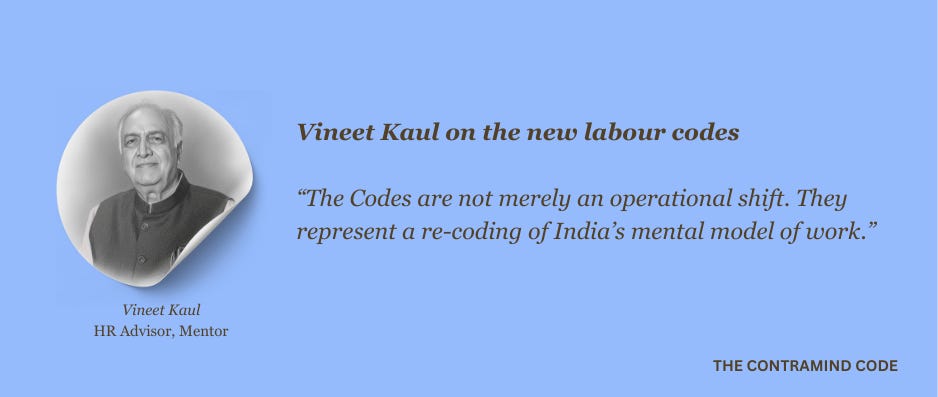
Vineet Kaul, an HR Advisor and Mentor with extensive experience across industries and geographies, has worked with the Aditya Birla Group as Advisor, Group Human Resources, and earlier as CHRO for Hindalco, and has provided a comprehensive view of the new labour codes. Vineet Kaul writes, “The Codes are not merely an operational shift. They represent a re-coding of India’s mental model of work.”
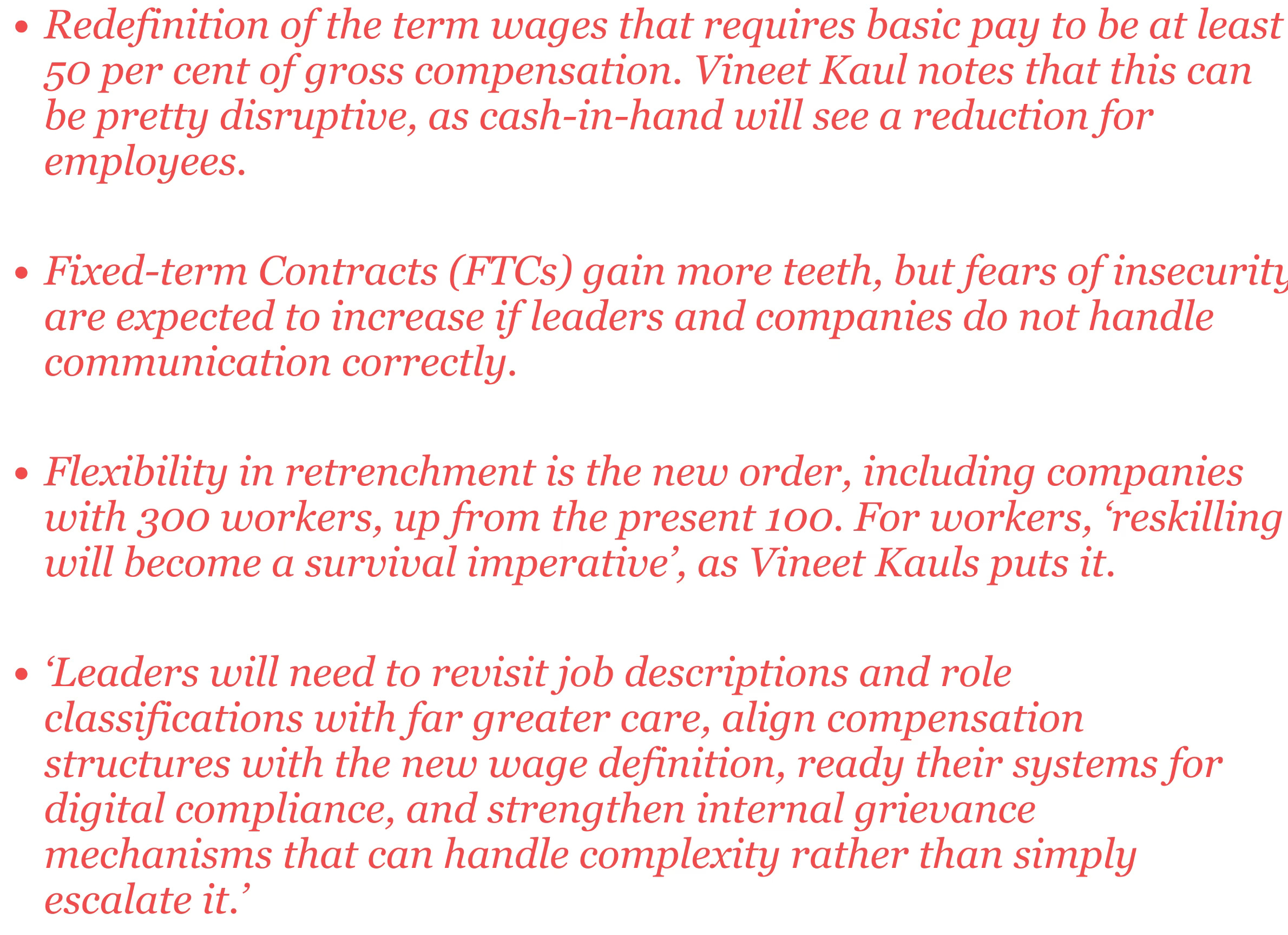
What are the significant shifts and their impact to be taken note of:
Read the entire article here.
How 48% Of Non-Engineers Are Shipping Production Software.
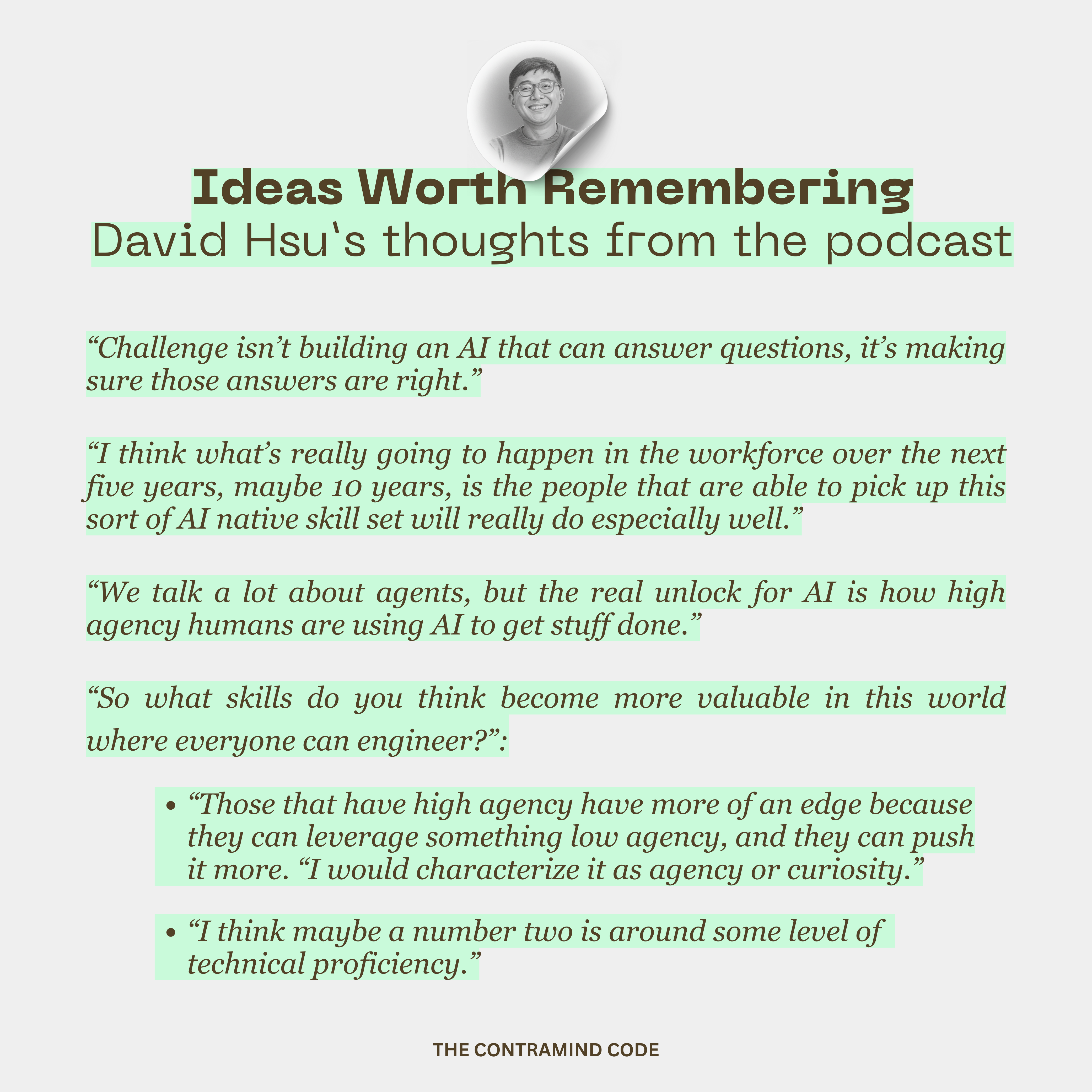
In this conversation, Retool CEO David Hsu discusses how AI is democratizing software development, why engineers might stop coding internal apps within 18-24 months, and what this means for the future of work.
Here are some interesting quotes from chat:
You can listen to the entire episode on: Apple Podcast | YouTube
McKinsey’s Vik Malhotra Shares Leadership Lessons & Consulting Career Advice.
Vik Malhotra, a senior partner and former Chairman of the Americas at McKinsey, shares his learnings and insights with Wharton students.
Vik Malhotra talks about the importance of resilience and teamwork, which he learnt at an early age.
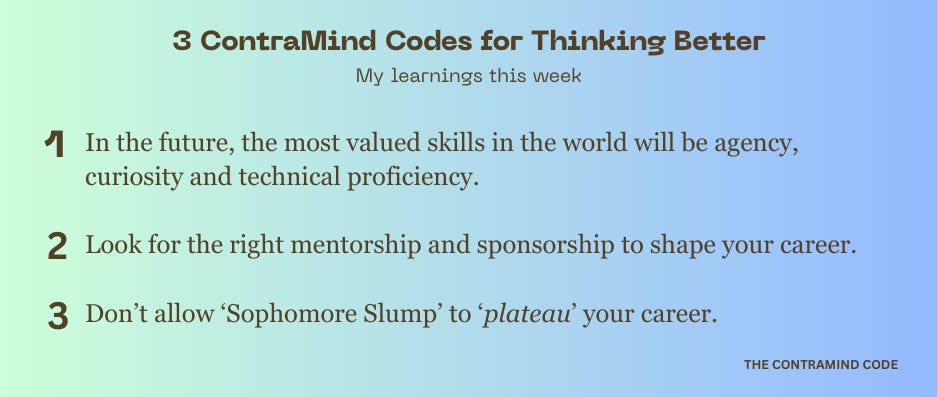
He also talks about the importance of leaders being able to drive strategy and portfolio choices with clarity and focus. The importance of mentorship and sponsorship in shaping your career. His point about bringing talent and teamwork together is one of the key takeaways from the chat - “It is not about a team of stars. It is about a star team.”
For leaders, he talks about the importance of bold vision, resource allocation, talent, and building a culture that’s fast-moving and agile.
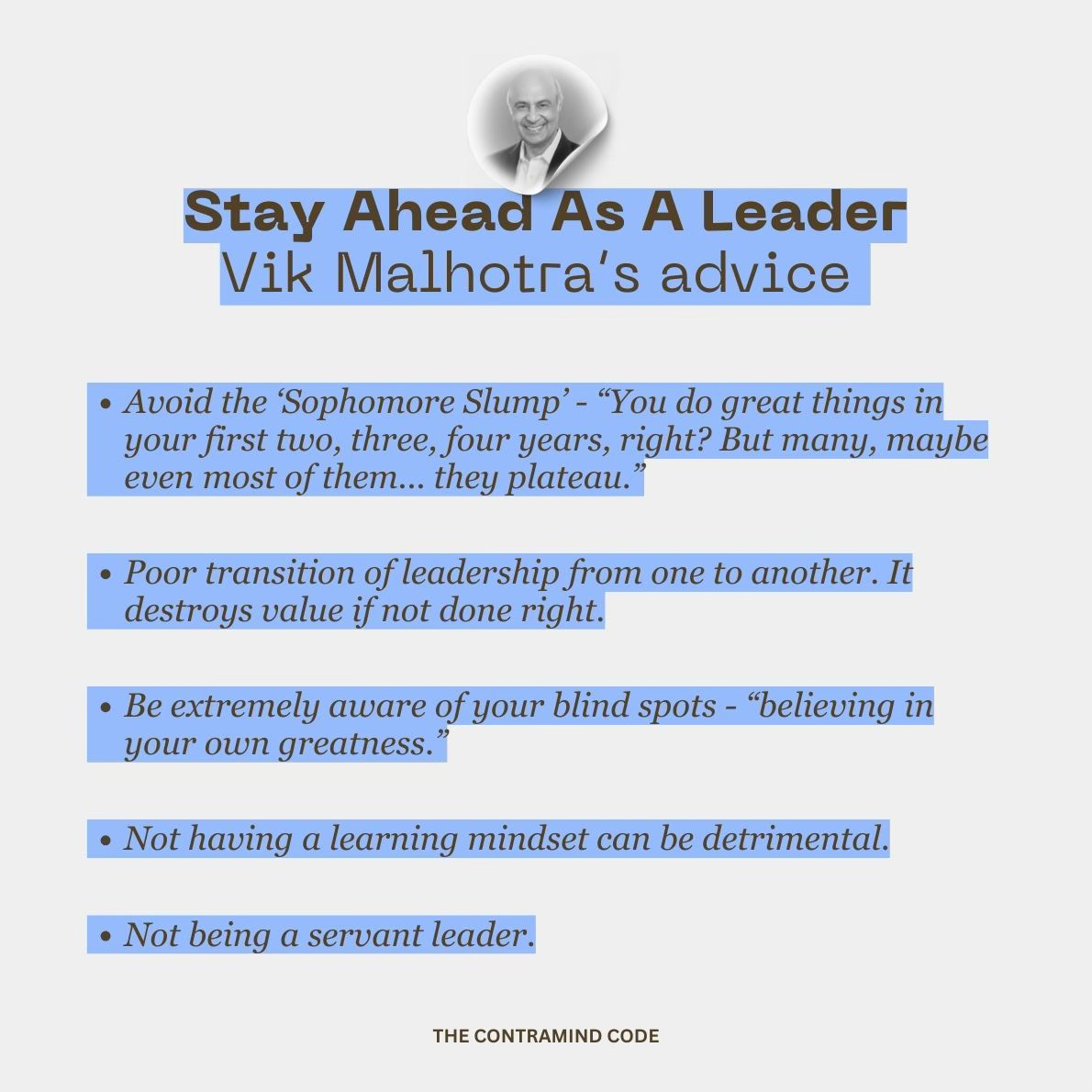
To stay ahead as a leader, he outlines a few things to avoid:
How Does ‘Sophomore Slump’ Affect Your Career?
Usually, a sophomore is a second-year student. If you extend this definition of sophomore to your career, you are at various stages of being a sophomore in your career and here are some examples of it:
Your ‘second-year’ at your job
Your ‘third-year’ of a promotion
Your ‘five-years’ in a senior leadership role
Your ‘second-year’ in a new job
The ‘Sophomore slump’ refers to a drop in motivation or performance during the second year. The initial excitement of freshman year wears off, and the reality of sustained effort, more challenging courses, and unclear goals sets in. A ‘Sophomore Slump’ fails most people, not because they lack talent, but because they lack psychological infrastructure.
The same thing happens at work for a majority of people. The initial excitement of the first job wears away. The motivation to crack the top company interview and get an offer fades after a year or two, once they have one. The exhilaration of a promotion, spending a few years in a leadership role, or the anticipation of a company switch slowly fades after a year or a couple of years. This is what can be called a ‘Sophomore Slump’ in your career. The real problem is that this happens every few years throughout your long career.
What you will not realise is that, if this phenomenon happens to you, the ‘Sophomore Slump’ is a change that does not visibly affect you overnight, but you slowly feel a lack of drive, motivation and ambition. You start to ‘plateau’ in your career and experience a reduced desire to continue pursuing mastery of your skills, as a ‘Sophomore Slump’ takes over your thinking and behaviour over time. After a few years, you will realize you are left behind, and you will begin to experience a skill or expertise deficit that stops your growth.
When you have a ‘Sophomore Slump’, you lose your strategic curiosity, creative energy, and long-term ambition. You stop asking:
“How am I performing?”
“How do I compare in capability and expertise vis-a-vis others?”
“What more must I develop to be better than the best?”
“How do I develop my own competency and success benchmarks?”
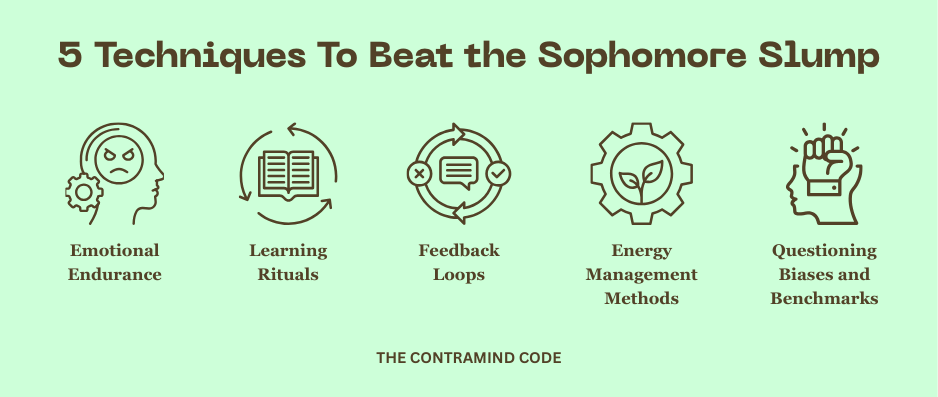
The successful traits of those who break away from the ‘Sophomore Slump’ understand the practice of:
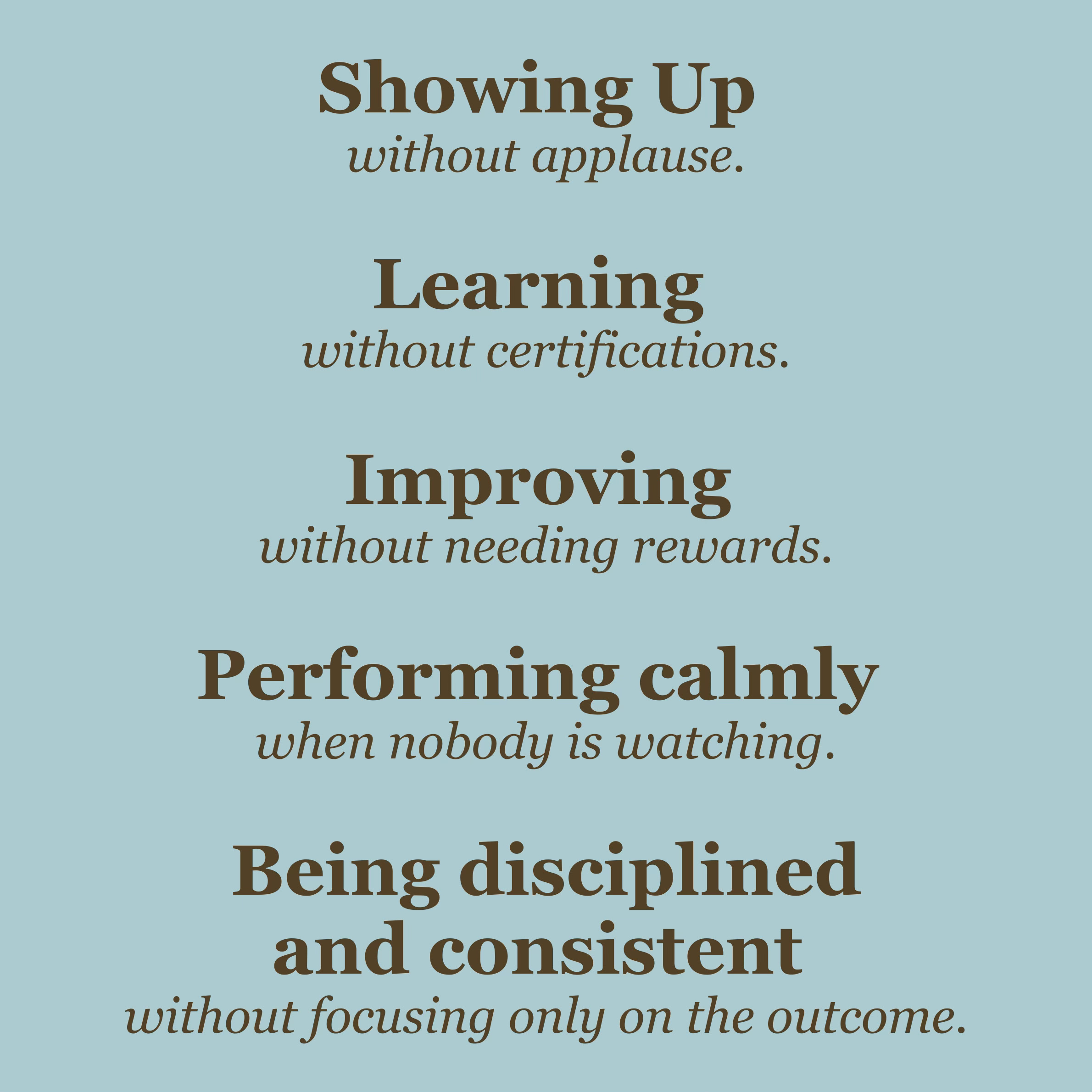
If you want to break away from ‘Sophomore Slump’, your drive, motivation, goals and ambition must become less external and more internal over time in your career.