A Better Way To Avoid Project Delays.
Companies are constantly battling project delays, and according to a 2021 report by the Project Management Institute, up to a third of projects are not completed at all. Project delays cause cost overruns, upset clients, and a serious impact on quality.
MIT Sloan Review’s article on project delays recommends a few ideas and tips to avoid them.
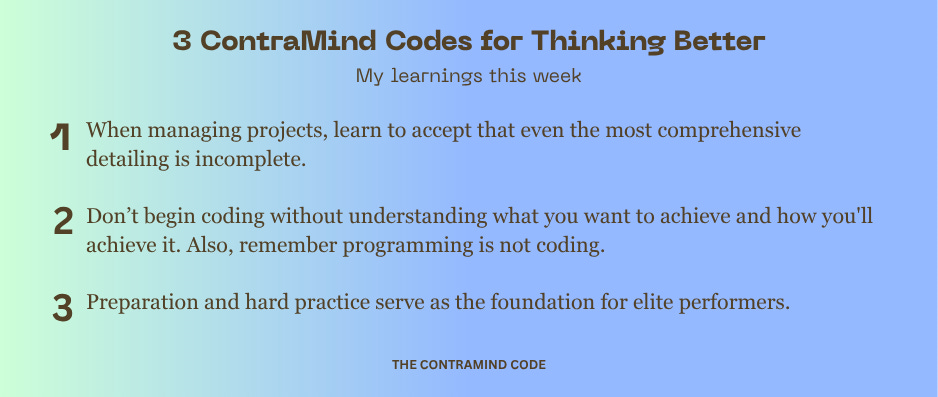
Avoid too much detailing: “Project planners intuitively focus on available specifications, usually not realizing that even the most comprehensive descriptions are necessarily incomplete. In addition, excessive details may lead to more confusion.”
Planning projects with reference to past estimates and completion can help.
Don’t get influenced by key stakeholders’ hopes and expectations.
Exclusively focusing on on-time delivery is also not recommended, as people tend to inflate estimates and slow their work pace to match them.
How To Run Down A Dream.
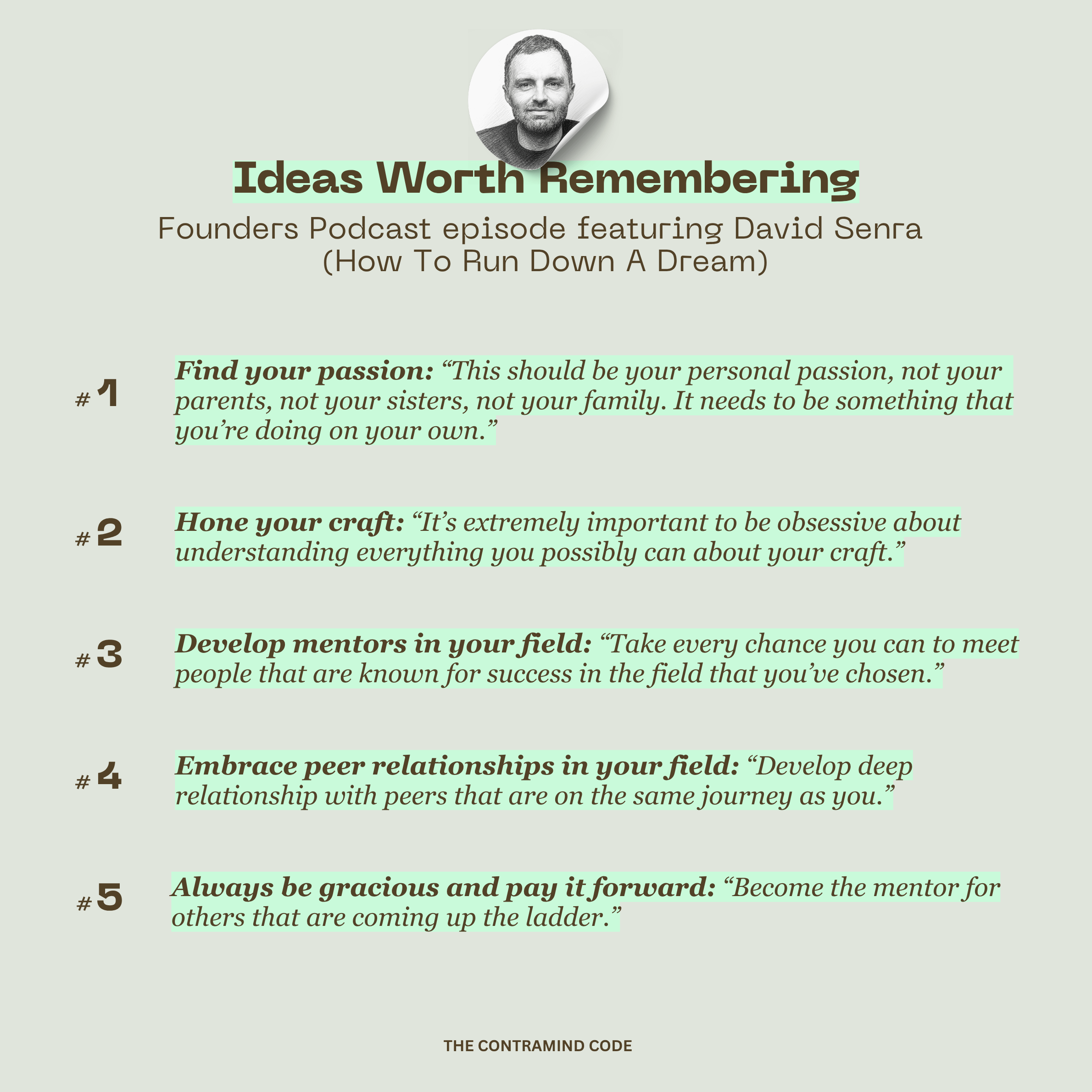
In this episode of Founders Podcast, David Senra shares stories of three remarkable individuals and dissects what made them successful in their chosen professions. It’s a phenomenal analysis of his learnings. Here are some lessons he has shared in the episode. If you like some of the key highlights below, you must definitely not miss the entire episode by clicking the link above.
Programming ≠ Coding: Leslie Lamport.
Leslie Lamport is an American computer scientist and mathematician. Lamport is best known for his seminal work in distributed systems, and here he explains why it is critical to distinguish the difference between programming and coding. He is the winner of the 2013 Turing Award (considered the Nobel Prize of computer science). He urges engineers to think before they begin to code.
Some of the points he makes in this talk are:
“Coding is the last step in writing a program.”
“The first step is deciding what we want to achieve and how.”
“Few programmers know how to do this or where to learn it.”
“The best methods for working through subsequent steps consist of using simple mathematics.”
How Preparation Beats Innate Talent To Succeed.
David Senra’s thoughts on what it takes for remarkable individuals to be successful in their chosen professions included one deep but rather unusual insight that sparked off a lot of thoughts, which was the idea of ‘The Will to Prepare vs The Will to Win.’
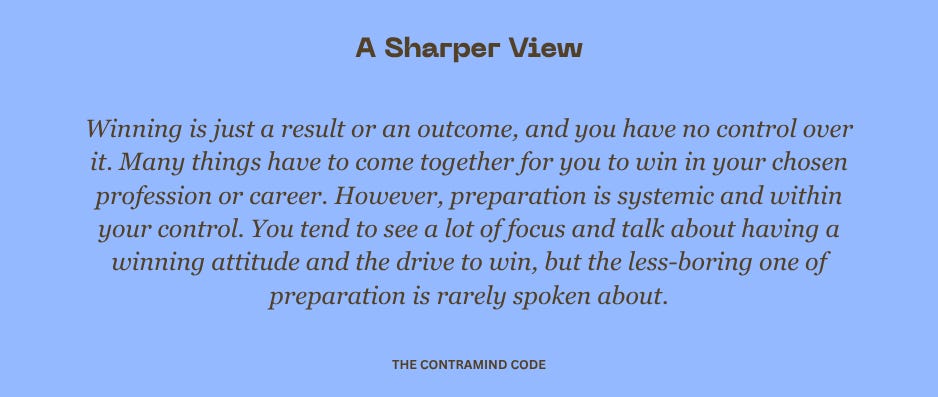
Winning is just a result or an outcome, and you have no control over it. Many things have to come together for you to win in your chosen profession or career - effort, timing, environment, opportunities, etc. However, preparation is systemic and within your control. You tend to see a lot of focus and talk about having a winning attitude and the drive to win, but the less-boring one of preparation is rarely spoken about.
Anders Ericsson, a professor at Florida State University, spent years studying how elite performers became highly proficient, and he concluded that structured preparation, intense focus, stepping outside their comfort zones, and rapid feedback loops were key to building mastery and expertise. He ranked these attributes higher than innate talent, but preparation is the hardest to follow and act on. When you read stories about winning, it pumps up your adrenaline and generates a lot of excitement, and all it does is give you ‘Momentary Moments of Motivation’. Preparation is all about the hard grind of doing boring things day in and day out, year after year.
Preparation shifts your thinking from Proving to Improving
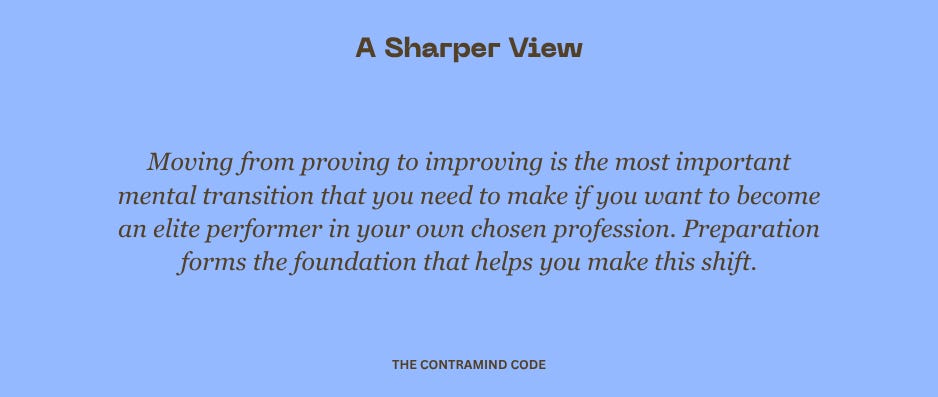
Moving from proving to improving is the most important mental transition that you need to make if you want to become an elite performer in your own chosen profession. Preparation forms the foundation that helps you make this shift.
First, you have to mentally come to terms with the fact that any outcome(winning or succeeding) is a lag indicator, while preparation is a lead indicator. A lag indicator reflects the results of your past actions. While, a lead indicator reflects your current behaviour, efforts, or inputs that have a causal effect on future outcomes. Lag indicators are unambiguous and cannot be influenced or changed, while lead indicators can be influenced by your actions. Winning is a lag indicator, while preparation is the lead indicator.
As human beings, we are hardwired for external validation - rewards, praise, rankings, promotions, increments, etc. Also, most of our institutions that we have gone to in our lives - schools, colleges, workplaces - throw up comparison rankings to show how you are doing better than someone else. Hence, you are wired for ‘proving’ yourself. Also, psychologically, performers gain love, recognition, attention, and others' approval. Teachers and leaders take a special interest in top performers because it helps them achieve their objectives or goals - best school or college rankings, best company to work for, etc. Hence, not being part of that high performer group, or losing or failing to achieve something, is not seen as feedback but rather as a failure. However, preparation begins by asking a different question that you are not normally used to - “What do I want to become?” rather than “What do you want to achieve?”
When you are focussed on preparation, you start to think differently from others around you. Preparation helps you focus on small but continuous improvements that do not feel like achievements but become transformational over time. You begin to start by thinking “I am a learner who competes” as against a “Winner who trains.” Therefore, you don’t get anxious about losing, but become absorbed in improving.
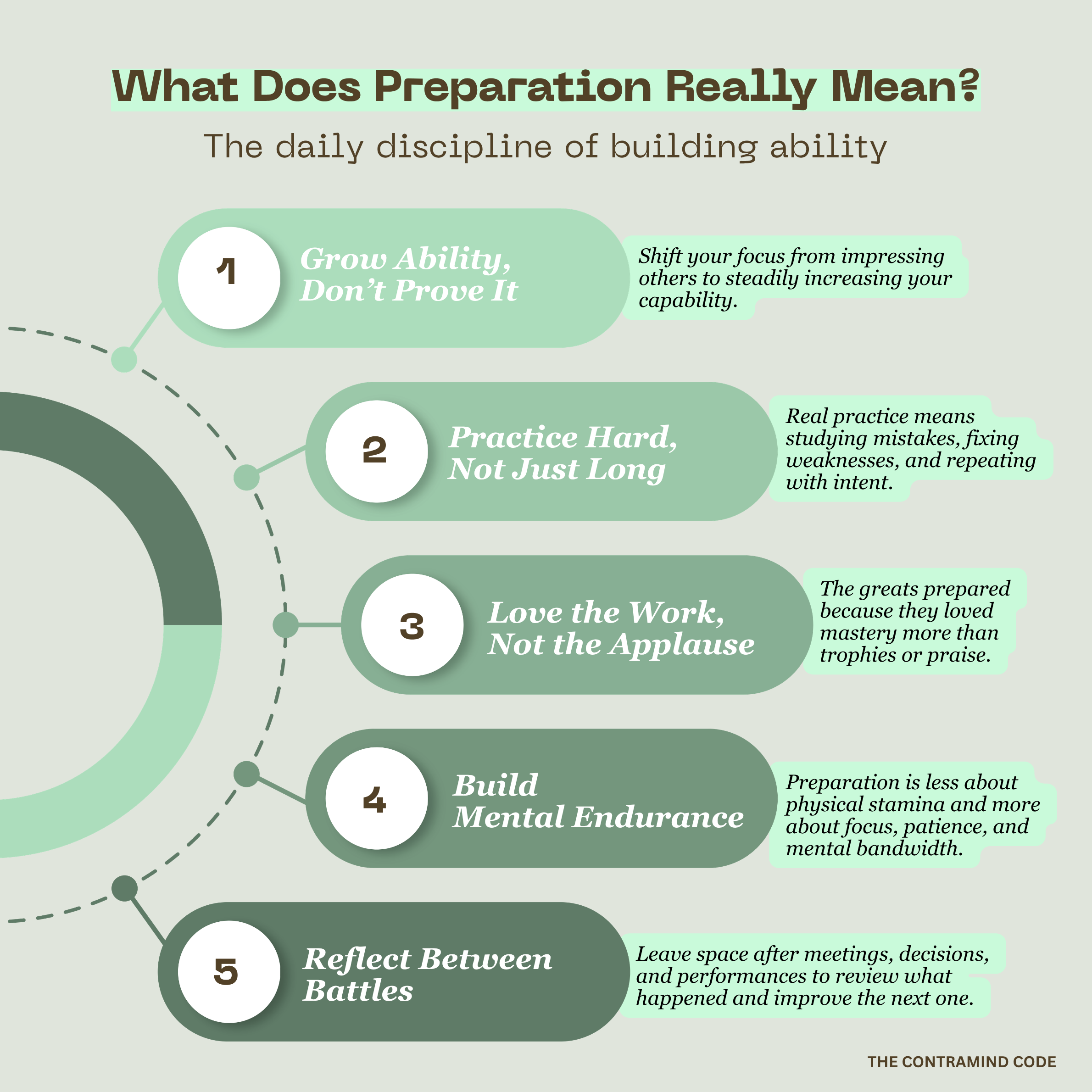
What does preparation really mean?
You must start to focus on ‘growing’ your ability rather than ‘proving’ it.
You should develop the habit of ‘hard practice’ which allows you mentally to work on your mistakes, misses, and build repetition till you become the best at it.
Kobe Bryant’s 4 am practice sessions are well-documented and widely written about. He studied his opponents for many hours, watching them in films or in TV games to prepare his moves. He also mentioned that his relationship with the game as one of ‘love for the work’, not the trophies.
Warren Buffett reads 500 pages a day because that's how knowledge works, as it builds like compound interest. That prepares him for the investment decisions that he makes. His preparation is all about ‘Intellectual saturation.’
Steve Jobs prepared his keynote for weeks. For him, rehearsal was a religion. His apparent spontaneity was due to intense preparation and demos that were rebuilt again and again till he felt it was perfect storytelling to the audience.
Roger Federer ‘lived the match’ in his practice. It was his compulsive preparation, like biomechanical drills, nutrition, and surface adaptation practice, that made him a legendary tennis player.
You should learn to enjoy the joy of progress and not the practice session itself. Hard practice is not just long practice. Hard Practice continuously exposes the gap between your current level and the required level. Hence, it can be demanding, uncomfortable, and frequently frustrating. It’s also not about mindless repetition but about structured practice that exhausts the mind, not the body. It’s not, therefore, about the physical endurance but the mental bandwidth and endurance that it takes.
You must develop the ability and also allocate time for post-mortem sessions after meetings, presentations, discussions, etc. People pride themselves on having back-to-back meetings. Don’t fall into that trap. Give yourself a break between meetings. It allows you to think about your decisions, your conversations, how you came to conclusions when information was given or thrown at you, and, if something had gone wrong due to your past decisions, refrain from assigning any blame for those failures and learn to isolate the outcome from the process of how you arrived at that decision, etc. It serves as a preparation for your next meetings.
Remember, amateurs practice on their strengths while elite performers practice on their weaknesses. This preparation and hard practice allow elite performers to reduce their narrowest point of failure. Preparation, therefore, improves their anticipation, hones their craft, and success is merely an outcome that they strive for. If not achieved, they develop the willingness and mental tenacity to go back to the drawing board to prepare, refine, and improve further.
Preparation helps you operate at the edge of your competence.