Introduction
Welcome to The ContraMind Code.
The ContraMind Code provides you with a system of principles, signals, and ideas to aid you in your pursuit of excellence. The newsletter shares the source code through quick snapshots for a systems thinking approach to be the best in what you do. The ContraMind Code helps you reboot and reimagine your thinking by learning from the best, and enables you to draw a blueprint on what it takes to get extraordinary things done. Please share your thoughts and comments to start a conversation here.
Take a journey to www.contramindslabs.com. Discover a complete system for ambitious professionals who refuse to plateau, and also a place where you can listen and watch some great minds talk to us about their journey of discovery of what went into making them craftsmen of their profession, to pursue excellence and drive peak performance.
The Patriot. The Hidden Figure Behind Palantir.
Colossus recently carried a story on Shyam Sankar, Chief Technology Officer of Palantir. It’s a lovely read, not because of the profile or achievements of Shyam Sankar, but his work philosophy, his motivation, knowing the mind and attitude behind the man, which helps decode why he does what he does.
Here’s what you will learn from the article:
How to make the choice of a job that offers making money immediately, versus taking up an offer in a startup where you get to work with some exciting people, but cannot make any financial promises!
Why is it important for you to do an honest evaluation of your job continuously by asking a hard question like “If I’m learning enough?” despite being in a comfort zone.
Bring people who work behind the kitchen to serve customers. It can fundamentally change the customer experience and value realization.
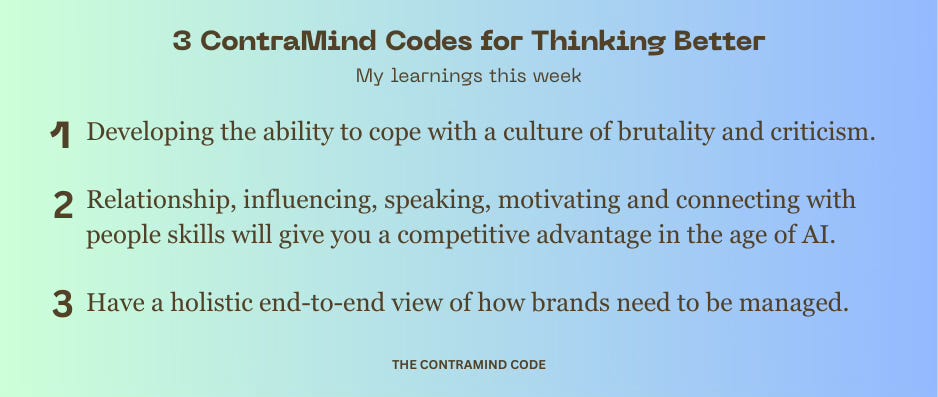
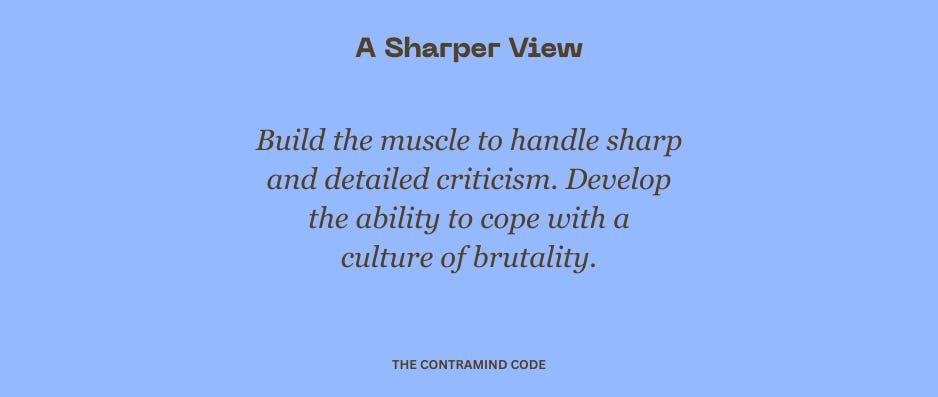
Build the muscle to handle sharp and detailed criticism. Developing the ability to cope up with a culture of brutality.
Software is no more than a tool but human beings need to do the analysis and take decisions.
Find ways to solve the mismatch between how computer systems store data and how human beings think about things.
Read the entire article here.
AI And The Future Of Work: What You Need To Know
In TED’s Your Undivided Attention Podcast, this conversation between Ethan Mollick, a professor at the Wharton School of the University of Pennsylvania and Molly Kinder, a senior fellow at the Brookings Institution has some very interesting insights into what could be the speed of adoption of AI in our work place and how will the way we work transform, with the advent of AI in our lives.
Here are some takeaways to help you prepare for the pace of change AI will bring to your work and workplace.
The evidence for widespread job disruption across the economy due to AI is not true! It doesn’t mean that AI has had zero impact on jobs. Some jobs, such as creative, coding, and customer service jobs, will be impacted. However, it is crucial to be a little careful about suggesting that all of it is due to AI when other factors are also at play!
There is bound to be a gap between the speed of technological development and the extent to which it will actually be adopted in the workplace. There is a need to factor in this lag effect, which history has shown us.
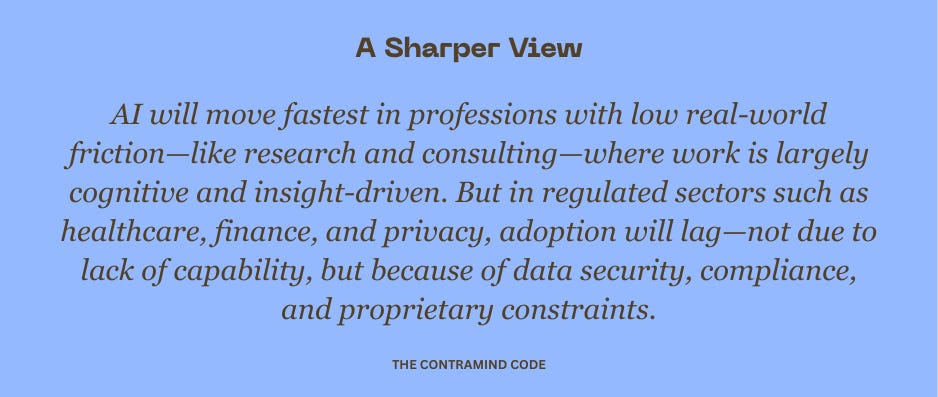
AI will have a far-reaching impact in occupations that have less friction with how the real world or business operates, like research, consulting, etc., but regulated businesses like privacy, healthcare, and finance will see a lag effect of its usage, given data security, proprietary data issues, etc.
“If your job really can be done sitting in a closet with a computer with no human interaction, that’s a much more problematic job.”
“I think augmentation will often win over automation.”
“So I think for young people, be good at being a human. I think relational skills, being influential, being able to kind of get up and speak and motivate and influence and connect with people, is definitely something that AI … is not going to be very good at right now.”
Building Brands: Big And Small
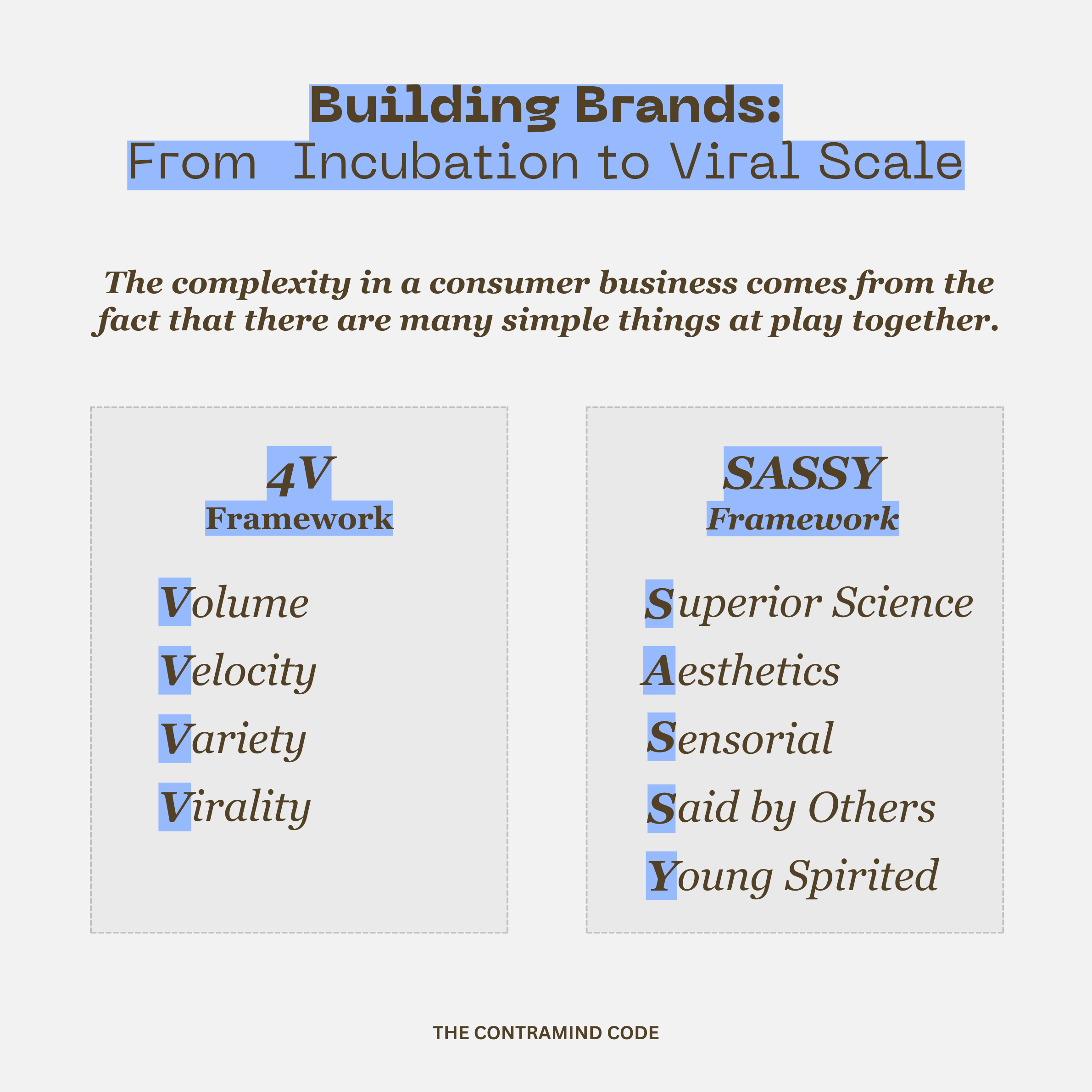
Pratik Ved, Vice President at Hindustan Unilever, is in conversation about a bunch of very relevant topics and areas that are today critical for marketers to focus on and sharpen their skills:
New marketing rules and frameworks.
Challenge of engaging GenZ.
Evolving role of brand managers in the new emerging digital ecosystem.
The power of influencer marketing and how to leverage it innovatively.
The need for a holistic, end-to-end view of how brands should be managed, from ideation to supply chain to distribution.
How at different lifestage of brands, the need to balance risk-taking while optimizing for growth and protecting volumes.
Why curiosity, problem-solving mindset and adaptability are vital for marketing professionals.
Your Work Is Moving From Unbundling Skills To Rebundling Skills
Over the last 150 years, since the advent of industrialisation, many occupations have been unbundled to optimise for the mass-manufacturing era. Any work was broken down based on three fundamental principles:
Standardization: It was all about producing large volumes of products, that were identical, standardized and interchangable using machines and semi-skilled labour.
Division of Labour: Complex work was broken into small, repeatable tasks.
Volume With Efficiency: The focus was on improving productivity and efficiency to reduce manufacturing time while also reducing unit cost per product.
Dawn of the age of unbundling of skills
Over several decades, any job to be done was broken down into ‘micro-tasks’. It was subdivided into smaller components of work, and much of the skills was engineered into the machine rather than the human. Before the factory or mass manufacturing era, an artisan would spend time building the entire product. Now, it was ‘unbundled’ to fit the assembly-line model, where each person began performing a specialised action. Work was designed for average workers who could produce significant volumes.
Therefore what we see today is ‘assemby line-thinking’ professionals or positions or roles - recruiter, accountant - account payable(AP), accountant - collections, quality or testing engineer etc. etc. Over the last 100 years, this has led to generation of professionals who have a tunnelled view of their role and contribution. Most of these people tend not to look beyond what they are doing, since someone else was responsible for the full product and accountable for the final output or outcome.
This also led to much more emphasis on consistency rather than creativity, and rewards based on getting better and better at repetitive work. Work became mechanical and monotonous. Processes became linear, departments became islands or siloed and job descriptions became narrow.
The emerging AI era will move toward the ‘rebundling’ of your work.
AI is absorbing repetitive tasks. So what do platforms like Cursor, Replit, and Claude code do? They are slowly subsuming many repetitive work streams that were siloed into bundled workstreams within a department or a company. It’s not just tech jobs. The world out there is far messier and more fragmented. In every other occupation, ‘rebundling’ of capabilities is becoming necessary.
Take, for example, car service technicians. They now need to move from pure mechanical servicing to resolving faults in electronic parts as more and more cars run IC chips and are IoT-enabled, etc. So, they need to ‘rebundle’ their capabilities, which must include ‘electro-mechanical’ skills.
Many adjacent roles are getting combined. As a developer or software engineer, writing code, fixing bugs, and fixing tickets will be rebundled into problem framing, augmented coding with AI tools, architecture decisions, etc. From a developer's perspective, the role is being rebundled and transformed into ‘workflow architect’. Similarly, a salesperson’s job is getting rebundled beyond outreach, relationships, and deal closure to sensing marketing signals, setting up, handling, and interpreting sales intelligence pipelines, etc.
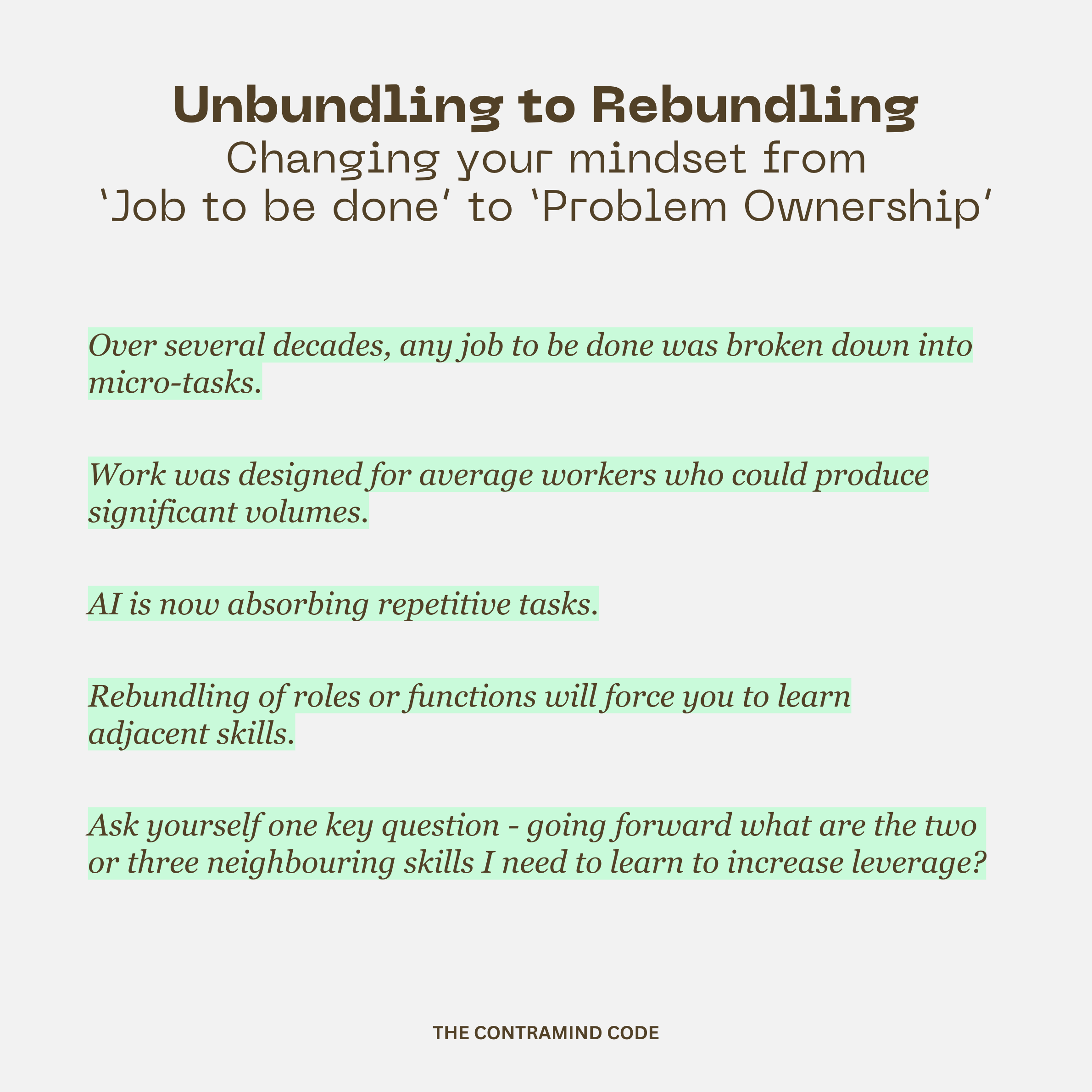
‘Rebundling’ of roles or functions will force you to learn adjacent skills, combine adjacent tools and collapse past artificial boundaries that may have been fixed in your mind.
For many occupations, rebundling will open opportunities when the mindset shifts from ‘Job to be done’ to ‘Problem Ownership.’ The professionals who will be successful in the future will be the ones who transform their capabilities from ‘This is my function or role’ to ‘I define, design, and orchestrate outcomes.’
Rebundling will accelerate a situation in your work environment where fixed job descriptions will cease to exist, and you will need to recombine two or three other capabilities to find a solution.
Ask yourself one key question, going forward -‘ What are the two or three neighbouring skills that I need to learn to increase leverage?’